The harmful chemical lurking in your children’s toys, clothes and accessories
Advertisement
Health
The harmful chemical lurking in your children's toys, clothes and accessories
A scientist tracks the dangers of flame retardants, meant to protect children, and why manufacturers cannot seem to stop using them.
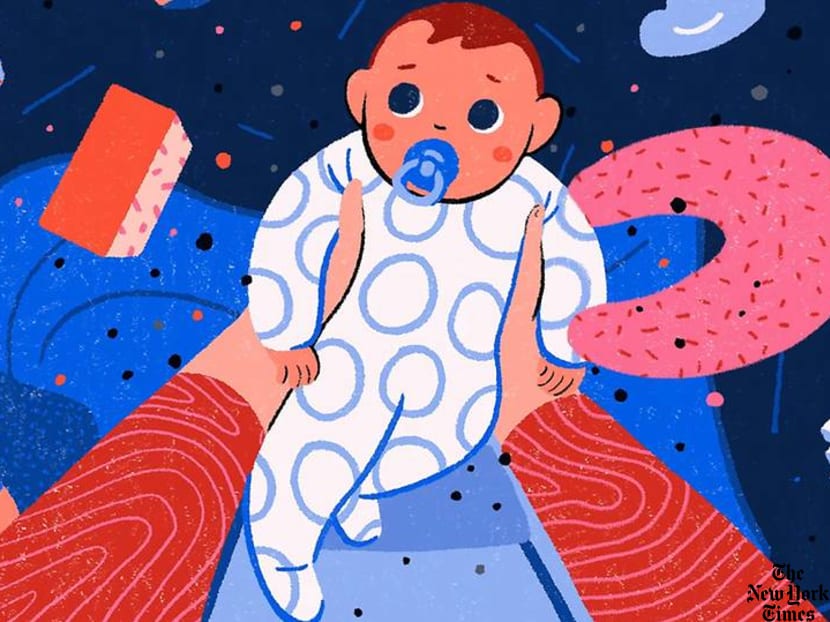
(Art: The New York Times)
Dr Heather Stapleton vividly recalled the moment she realised that the unsafe chemicals she studied in her lab had entered her home.
A chemist at Duke University, Dr Stapleton had simply put her i-yr-sometime son Joshua to bed and was chatting with a colleague in her living room nigh their latest research.
The scientists were talking nigh the toxic chemicals they'd found in babe gear, added to prevent them from catching on burn down. All of a sudden, they noticed a tag on her son's polyester tunnel. "We're like, wait," Dr Stapleton said. "Is that a flammability standard on the tunnel?"
Sure enough, the tunnel'southward tag said that it met a flammability standard for camping ground tents, meaning that the material contained chemic flame retardants that would prevent information technology from catching – and staying – on fire.
READ: TCM for kids? Some parents are taking an alternative approach to paediatric wellness
So Dr Stapleton did what any new mother with access to a state-of-the-art chemistry lab and a US$120,000 sample analyser would exercise. She cut a snippet of the tent and brought information technology dorsum to her lab for assay.
She was shocked by what she found on the fabric: A flame retardant, called chlorinated tris, that manufacturers had voluntarily removed from babe pyjamas decades earlier after researchers showed it could alter DNA, and likely crusade cancer, in exam tubes.
"That really horrified me," she said, recalling how Joshua loved to play peekaboo through the tunnel's mesh windows. "He put his oral cavity all over that mesh."
Flame retardants are chemicals that manufacturers started calculation to commercial and consumer products in the 1970s to meet flammability standards. While not all of the hundreds of flame retardants on the market nowadays health risks, scientists have raised concerns nigh formulations that contain chlorine, bromine or phosphorous.
Flame retardants are typically added to goods with the potential to ignite, like upholstered piece of furniture, infant products, electronics, building and construction materials, habiliment, car seats and vehicle interiors.
The chemicals tin can escape from treated products and penetrate the pare or accumulate in grit, which kids can get on their easily and put in their mouths.
Extensive research in lab animals has linked different flame retardants to various wellness bug. Brominated flame retardants, which have received the most scrutiny, tin can build up in tissue, crusade cancer, disrupt hormones, damage the reproductive organization and cause neurodevelopmental bug, at least in animals and perhaps humans, too.
READ: Are pop YouTubers influencing our children with hidden junk nutrient ads?
Studies in people are limited, largely considering they require far more time and resource, simply have found like effects, including increased risk of cancer, lower IQ and perhaps behavioural problems in young children, including hyperactivity, aggression and bullying.
Before this year, researchers reported that brominated flame retardants surpassed lead every bit the biggest correspondent to IQ loss and intellectual disability in children.
So how did they cease upwardly in Joshua'due south toy? Flame retardants, like many toxic chemicals, are loosely regulated. Manufacturers aren't required to prove that they're safe or fifty-fifty that they keep products from going up in flames.
Although researchers have linked numerous flame retardants to serious wellness effects, The states federal regulators never banned their apply in all products. So when manufacturers hold to stop using flame retardants in one production, like baby pyjamas, they simply find other uses for them – or switch to similar chemicals that scientists haven't evaluated yet.
"I phone call it the chemical conveyor belt," Dr Stapleton said. "They simply go on coming."
Toddlers' urine had 15 times higher flame retardant concentrations than their mothers', perchance from crawling on the flooring before sucking on their hands.
There is likewise no reason these chemicals should exist in many products in the first identify. There is no dominion requiring flame retardants to be in children's toy tents, said Patty Davis, a spokeswoman for the US Consumer Production Prophylactic Commission, which regulates consumer products.
But Dr Stapleton wasn't about to wait for regulatory action. And so she dedicated her career to figuring out what other products might expose kids to these dangerous chemicals.
READ: Tips on how to heighten your children to be vegetable eaters
Luckily, she had plenty of collaborators around the country to assist her sift through the dizzying alphabet soup of industrial flame retardants, including the pharmacist who first sounded the alarm virtually their risks.
THE Chemic CONVEYOR BELT
In 1977, Arlene Blum, and so a pharmacist at the University of California, Berkeley, was the showtime to prove that brominated tris, a flame retardant in children's pyjamas, gets into kids' bodies and might cause cancer.
Regulators quickly banned the chemic from pyjamas. Simply manufacturers only switched to its chemic cousin, chlorinated tris – the flame retardant Dr Stapleton found in Joshua's tunnel. The next year, Dr Blum showed that the replacement had "virtually the same" chemical construction and potential to crusade cancer.
These days, Dr Stapleton and Dr Blum, who now runs the non-turn a profit Dark-green Scientific discipline Policy Institute, ofttimes collaborate as chemical detectives.
It'south a daunting job. They can't simply ask companies that make car seats, play tunnels or other kids' products which flame retardants are included, considering most have no idea. It's nigh impossible to track a chemical from the fourth dimension it's made to when it'due south added to components that are then incorporated into consumer products.
Then they must decide which of the scores of kids' products accept flammability standards, and which of the hundreds of chemicals on the constantly irresolute United states of america$seven billion flame retardant marketplace might be used.
Back in 2009, when Dr Stapleton analysed foam from her son's nursing pillow and other baby products, she flagged ii flame retardants that had not been publicly identified earlier.
Fifty-fifty without a car seat, rider seat foam typically contains loftier levels of chemicals like chlorinated tris.
After that, she asked colleagues to donate cream from automobile seats, strollers, nursing pillows and other baby products. Her study, published in 2011, found flame retardants in 80 per cent of more than 100 tested products, including all machine seats.
The adjacent year, she found flame retardants in 85 per cent of more than 100 couches tested, revealing the family unit sofa as a major source of exposure.
The most normally detected flame retardant in both baby products and couches was chlorinated tris. Manufacturers agreed to remove information technology from kids' pyjamas more xl years ago, but it keeps coming back, like Batman reboots.
READ: Here'due south how you tin can get your kids to open up about anything
Just there'due south always another chemical on the conveyor belt and another product to put information technology in. For instance, machine seats are loaded with flame retardants to meet the aforementioned US federal motor flammability standards as the cars they're strapped into.
Simply since most motorcar fires starting time in the engine, Dr Blum said, flame retardants won't help once a fire reaches the passenger compartment. Dr Blum worries kids who eat in their machine seats may get a helping of flame retardants with their Cheerios.
Jennifer Garfinkel, a spokeswoman for the American Chemistry Council, a chemical manufacture trade grouping, dedicated the utilise of flame retardants in car seats. "Maintaining fire rubber in vehicles is essential," she wrote in an email, "and flame retardants are an appropriate method to improve fire safety in such applications, pursuant to the federal government'due south flammability requirements."
Car seats with naturally fire-resistant materials, like wool, can cost twice as much as chemically treated seats. Fifty-fifty without a car seat, passenger seat foam typically contains high levels of chemicals like chlorinated tris, Dr Stapleton said.
LESS STUFF, LOWER EXPOSURES
In 2017, Dr Stapleton reported that toddlers' urine had 15 times higher flame retardant concentrations than their mothers', perhaps from crawling on the flooring before sucking on their hands.
In October, her squad published a report that found that urine concentrations of one type of flame retardant increased along with the number of infant products at home. "It suggests that if y'all bought a ton of stuff, there'south more exposure to the kids," Dr Stapleton said.
READ: The truth nearly kids' poo – and what information technology says most your toddler's health
The study measured simply exposures, not health effects. But finding loftier levels of these toxic chemicals in babies equally immature as six weeks old, when immune and neurological systems are still developing, is worrisome, the authors noted. Since children are mostly exposed through house grit, experts recommend using a vacuum with a HEPA filter and washing kids' easily ofttimes.
The prove regulators require to ban a substance seems to grow every year, Dr Stapleton said. And they all the same evaluate the risk for one chemical at a time, even though people are exposed to multiple chemicals simultaneously. "Information technology's very challenging to characterise those exposures," she said. "Merely nosotros need to start moving in that direction."
Dr Blum has been urging regulators to retrieve most harmful chemicals every bit members of a class. "The solution isn't another chemical, just a dissimilar way of designing a production or a dissimilar regulation," she said.
Dr Stapleton has turned her attention to trampoline parks and obstruction courses that accept pits with foam cubes, which are too treated with flame retardants. Kids sally from those pits sweaty and covered in dust and debris from the cream, so parents should brand sure kids bathe when they get dwelling.
By Liza Gross © The New York Times
This article originally appeared in The New York Times.
https://www.nytimes.com/2020/11/23/parenting/home-flame-retardants-dangers.html

Contempo Searches
Trending Topics
Source: https://cnalifestyle.channelnewsasia.com/wellness/fire-retardant-harmful-chemical-children-toys-car-seat-couch-235966
0 Response to "The harmful chemical lurking in your children’s toys, clothes and accessories"
Post a Comment