Traditional shadow puppetry with a modern twist revives dying interest in Malaysia
KUALA LUMPUR: Princess Leia bends downwards and slips a disk containing the plans for the Decease Star battle station into R2-D2.
And next comes C-3PO, bursting onto the scene looking for the astromech droid. Startled, Princess Leia leaves in a hurry.
This classic Star Wars scene was reenacted recently at a shopping mall in Kuala Lumpur, except that the characters were portrayed in traditional wayang kulit (shadow puppetry) style and were conversing in Malay.
Their names were besides given a localised twist - Princess Leia was known equally Puteri Leia, R2-D2 equally Ah Tuh, and C-3PO, Si P Long.
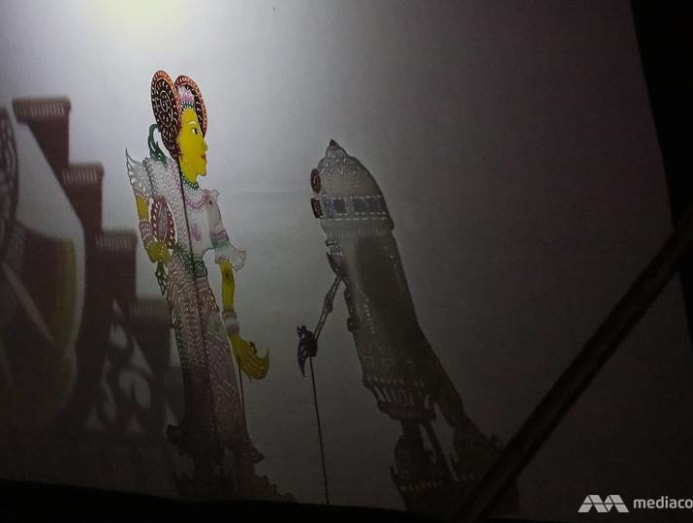
Presented by Fusion Wayang Kulit, the Star Wars-inspired performance is a modern accept on Wayang Kulit Kelantan, a form of traditional art that has lost its appeal over the years, no cheers to changing times and a ban imposed by the land government.
During the recent performance, the audition watched in please as the silhouettes of the lead characters Perantau Langit (the Sky Voyager, referring to Luke Skywalker) and Sangkala Vedeh (the Powerful Full general Vedeh, Darth Vader) battled on the translucent white screen.
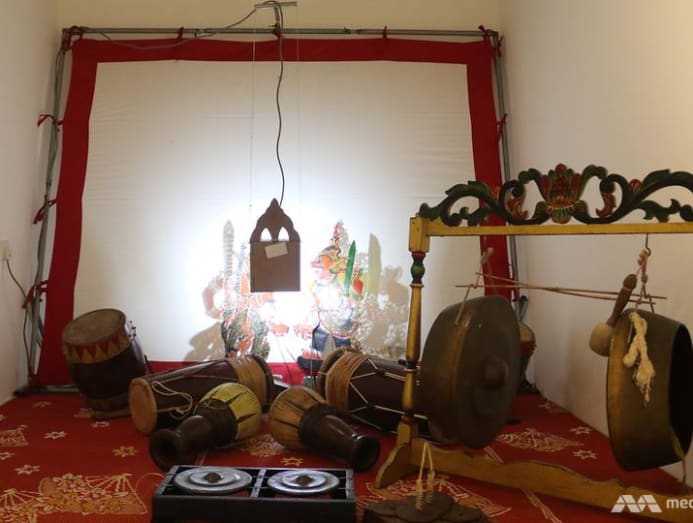
At the other side of the screen, accredited dalang (chief puppeteer) Mr Muhammad Dain Othman was solely in-charge of animate life into these colourful, two-dimensional puppets.
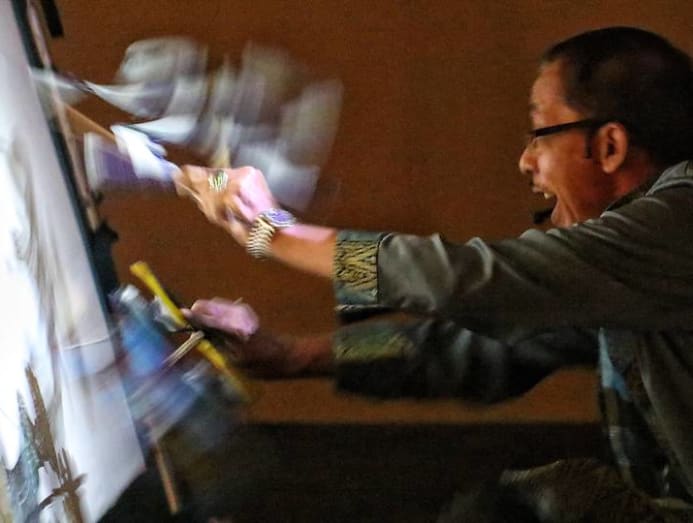
He orchestrated the characters' movements beyond the screen while narrating the story. A puppet made its archway, another exited, their shadows grew larger as they moved further from the screen, casting a theatrical feel to the performance.
Behind Mr Muhammad Dain, a musical ensemble took cues from him to weave rhythmic tunes to accompany the show.
A WINNING FORMULA
Fusion Wayang Kulit, a abstraction of Mr Tintoy Chuo and Mr Teh Take Huat, has carved a name for itself with its wayang kulit depictions of pop culture icons.
Besides Star Wars characters, Curiosity and DC superheroes were too given a wayang kulit makeover, often eliciting oohs and aahs from fans and not-fans alike.
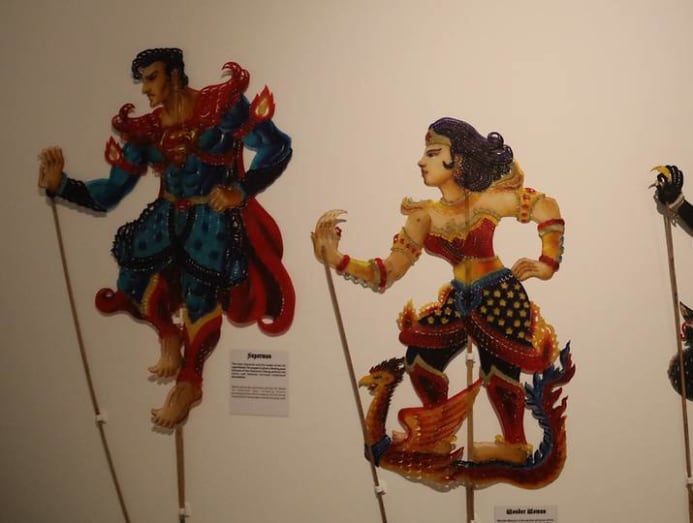
It all began with a lightbulb moment when Mr Chuo was looking for a unique idea for an art exhibition in 2012.
A character designer past profession, the 46-year-old thought of creating wayang kulit characters enhanced past futuristic elements.
"I am a large fan of Star Wars, so I wanted to combine Star Wars and wayang kulit. That'south how everything started," he said.
Traditionally, the storyline of Wayang Kulit Kelantan centres on the triumph of good over evil in the Seri Rama tales based on the Hindu ballsy. It recounts the journey of Seri Rama to rescue his wife Sita Dewi, who was captured by the evil Maharaja Rawana.
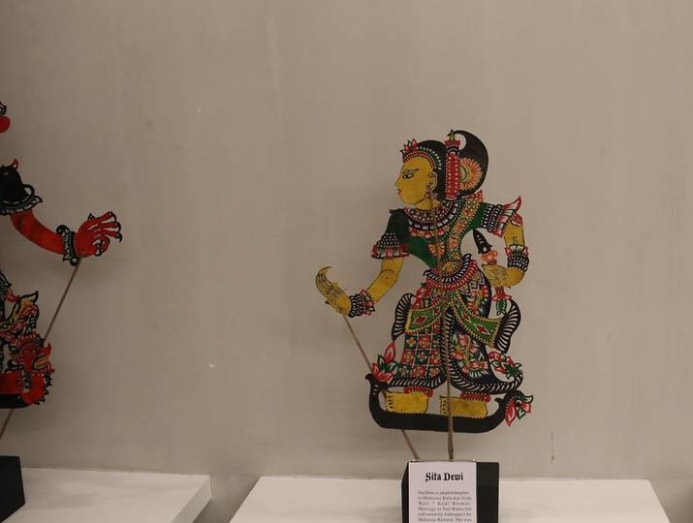
Star Wars too has a classic good versus evil theme, Mr Chuo said, drawing a parallel between both.
With zero feel in making traditional wayang kulit puppets, he laser-cut his Star Wars-inspired characters out of fine art lath for the exhibition. Little did he know that a much bigger project would ensue.
By chance, Mr Muhammad Dain caught wind of Mr Chuo'southward search for a chief puppeteer and reached out to him on Facebook. The 2 met upwardly at Mr Muhammad Dain's workshop in Kelantan, and it turned into a crash course of sorts for both.
"I learned about the process of making a wayang kulit graphic symbol, and he was introduced to all these sci-fi characters. He was very open-minded. Information technology was a proficient experience for the states," said Mr Chuo.
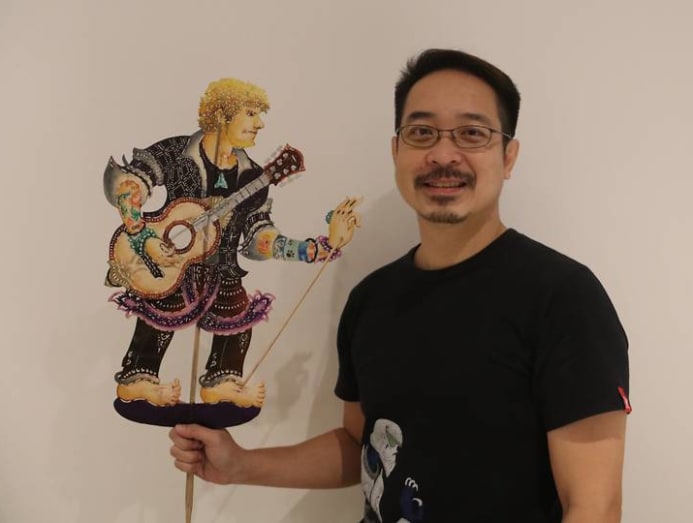
In this partnership, Mr Chuo designs new characters and plans the storyline, while Mr Muhammad Dain focuses on puppet making and performance.
"He is an expert in the history, format and characteristics of wayang kulit. I desire to brand sure what we do is correct, because when we talk virtually introducing Star Wars, there are many modernistic elements such as laser guns. How should we get it right?"
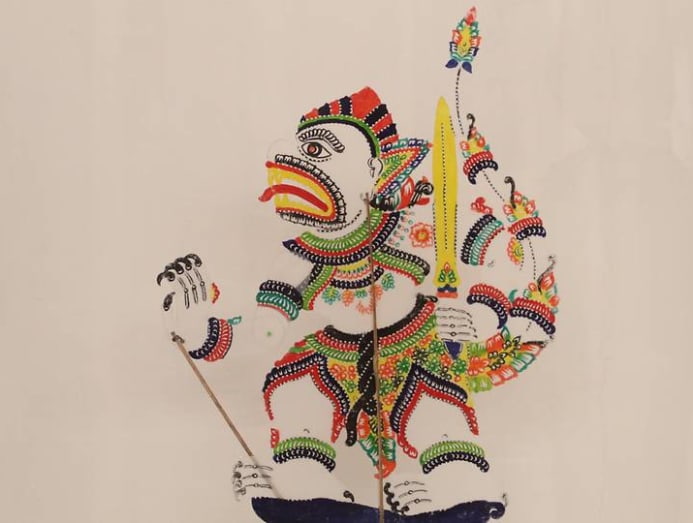
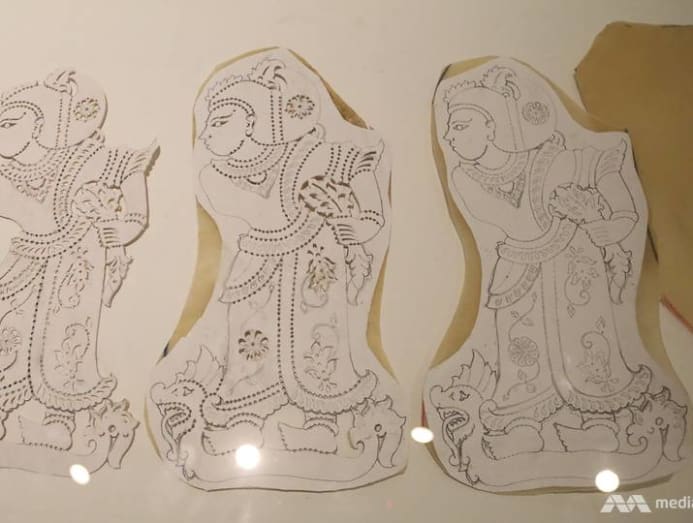
When designing the puppets, Mr Chuo makes sure they adopt the posture of the traditional puppets. Each is embellished with traditional elements.
A wayang kulit figure usually has one moveable arm for the principal puppeteer to manoeuvre during performances. The other arm holds a tool associated with the character, such as a lightsaber for the jedi.
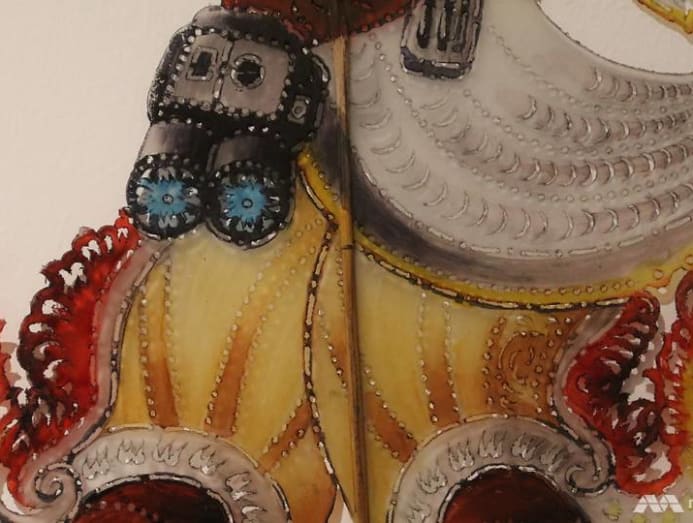
"I imagine Perantau Langit (Luke Skywalker) to be a person who walks in the sky, so I add feather - a Seri Rama feature - to his legs," he explained.
In one case Mr Muhammad Dain approves the design, his puppet crafters will then cut the grapheme out of cowhide (or plastic for certain characters) and chisel motifs onto the puppet with hammer.
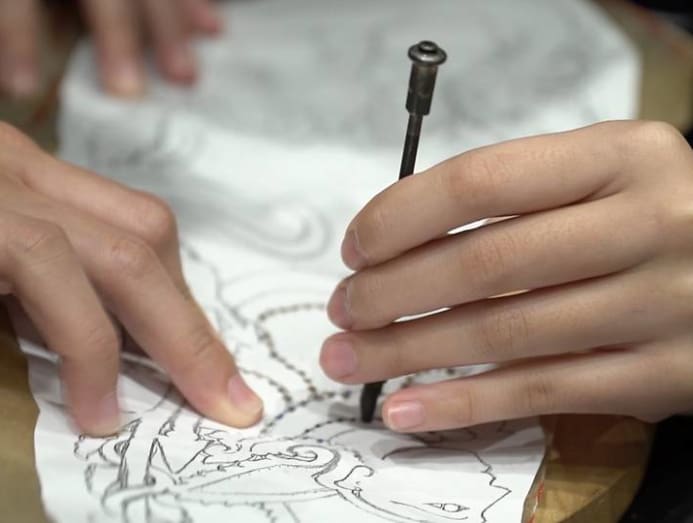
On stage, figurer-generated special effects are introduced to enrich audience feel.
In the Star Wars-inspired wayang kulit prove, Sangkala Vedeh has a hoarse, menacing voice, while a fiery sky hangs over the characters in nighttime scenes to evoke a spine-chilling mood.
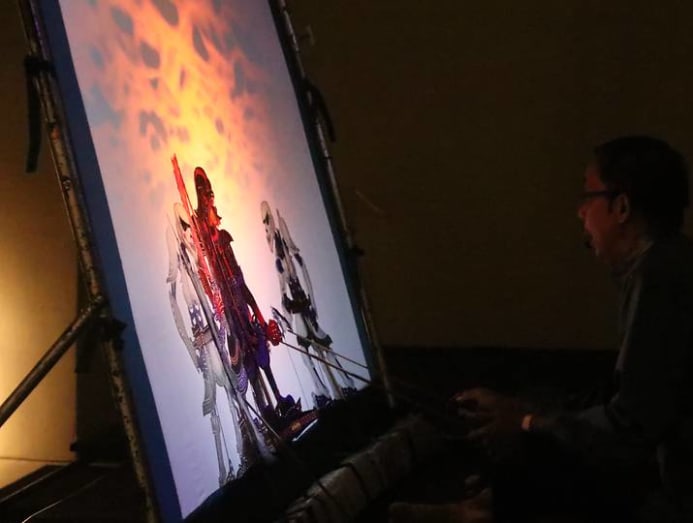
Mr Chuo believes Fusion Wayang Kulit has found a winning formula to make wayang kulit appealing for the public, particularly the younger generation.
"I think the formula works, considering people cannot relate to the traditional wayang kulit - information technology is beautiful, don't get me wrong - but when you accept characters like ours, which the young people recognise, information technology is easier for them to take," he said.
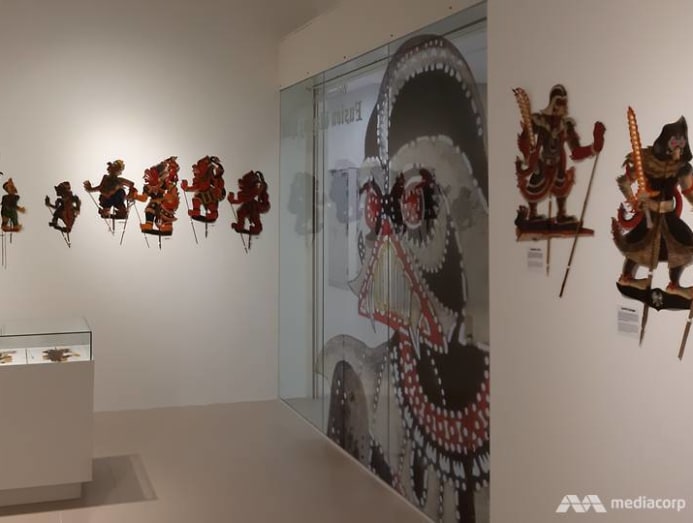
Nonetheless, despite it being known for its modern characters, a prominent space of its newly-opened gallery in Kuala Lumpur is defended to the figures in the Seri Rama repertoire.
Visitors are kickoff walked through the traditional characters, before they are introduced to those created by Fusion Wayang Kulit.
Country BAN HITS WAYANG KULIT POPULARITY
Wayang Kulit Kelantan has its roots in the eastern state in Peninsular Malaysia. Even so ironically, it was banned by the Parti Islam Se-Malaysia-led state government in 1998 along with other forms of traditional art including the Mak Yong dance for containing elements deemed "un-Islamic".
Under the ban, wayang kulit can but be staged openly once a calendar week at the cultural centre, Mr Muhammad Dain said. The effect of the ban was detrimental.
"We used to accept 50 wayang kulit troupes in Kelantan, but the total declined to just 12 today."
Mr Muhammad Dain, 67, began learning the art course in 1980 from three masters.
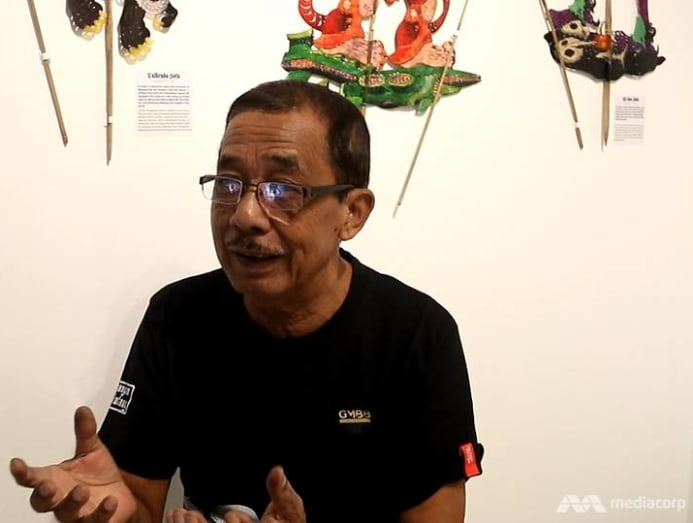
He said information technology was a natural path to take because wayang kulit was flourishing back and then. He performed wayang kulit on the side, while property a day job as a authorities officer.
The subsequent country-imposed ban, coupled with the fact that people were getting more educated and technology was becoming increasingly advanced, led many to see wayang kulit as outdated and irrelevant.
"As a master puppeteer, this phenomenon saddens me, not because of (its effect on) puppeteers, simply the fine art," Mr Muhammad Dain said.
A United Nations special rapporteur in the field of cultural rights had in March said it is a shame that these arts are banned in the state where they were actually born. Malaysians, particularly the Kelantanese, would lose a role of their civilisation if the art forms were left to die, Ms Karima Bennoune said.
Universiti Sains Malaysia's (USM) Acquaintance Professor Dr Equally Hardy Shafii described the ban every bit a blow to i of the genius works in the field of performing arts and literature.
"It is similar destroying your own heritage without understanding the concept and philosophy of life and the importance of aesthetics in our lives.
"In truth, fear, ignorance and insecurity may run into the demise of other forms of art as well," the managing director of USM'due south Dewan Budaya (Cultural Centre) told CNA.
On Wednesday (Sep 25), Kelantan Deputy Chief Minister Mohd Amar Nik Abdullah said the state guidelines should not exist viewed as a hindrance to art performances.
He said artists should exist creative, instead of seeing the rules every bit something that limit their involvement in the art forms, Sinar Harian reported.
Mr Mohd Amar said the Mak Yong trip the light fantastic toe and wayang kulit are permitted every bit long as elements that run against Islam are eliminated.
REVIVING THE ART
If Malaysia wants to revive this old class of storytelling, the government and relevant agencies accept to give some thought to marketing the art, Mr Muhammad Dain said.
"Right now, wayang kulit puppeteers and musicians cannot rely solely on the fine art for livelihood, at that place isn't a marketplace for wayang kulit."
The Education Ministry building and the Tourism Ministry building, in detail, tin work together to teach the younger generation about Malaysia'southward own culture and heritage, USM'south Assoc Prof Hardy said.
"Our education organisation should emphasise on the importance of culture from pre-schoolhouse onwards. Concentrate on good moral values and ideals.
"Nurture our younger generation on why we should value our ain heritage, with folk songs, trip the light fantastic and local stories embedded into our curriculum," he said.
For wayang kulit, an emphasis should too exist put on the traditional characters in the original repertoire, the academician opined. "The characters are unique, interesting and contemporary enough to exist highlighted. By redesigning it, the image on the screen should be spectacular and colourful."
Every bit for Mr Muhammad Dain, the original Seri Rama tales are still shut to his center.
The moral and life lessons they convey are essential elements of wayang kulit, he said.
"Simply perhaps nosotros tin can first attract the younger generation to appreciate wayang kulit, and and so afterwards, add these values to stories that are suitable to our society."
Source: https://cnalifestyle.channelnewsasia.com/asia/malaysia-wayang-kulit-modern-twist-traditional-kelantan-ban-229126
0 Response to "Traditional shadow puppetry with a modern twist revives dying interest in Malaysia"
Post a Comment